What's the difference?
The Chevrolet Silverado enjoys enduring popularity in Australia’s unique new vehicle market for locally remanufactured right-hand drive versions of full-size US pick-up trucks.
Armed with unique V8 power, the range offered by General Motors Speciality Vehicles (GMSV) comprises the entry-level 1500 LTZ Premium and top-shelf 1500 ZR2, while the colossal 2500 HD offers the ultimate in heavy towing capabilities.
Their combined sales represent a leading market share of more than 40 per cent, in a specialised segment where purchase prices extend well into six figures.
The latest MY26 Silverado range is backed by a new five-year/unlimited km warranty paired with five years of roadside assist, which provides greater peace-of-mind for buyers than the previous three-year/100,000km and three years' roadside assist. The ZR2 also gets upgraded driver assistance plus additional exterior colours.
We recently spent a week aboard one of the latest 1500s to find out why the Silverado is such a popular choice for Aussie buyers and if it’s well suited to tradie duties.
I know, picture Ferrari and you'll likely be conjuring images of potent V12 or V8 engines, a scenery-shaking exhaust bark on start-up and a fuel bill that would make a Sheikh wince.
But this one, the 296 GTS, doesn't have, or do, any of those things. In fact, it doesn’t so much explode into life as it does kind of whirr gently, as though you’ve just switched on a photocopier.
And yet, people I trust on these matters reckon this just might be the best Ferrari to have ever worn the badge. So, I guess we better get to figuring out what the hell is going on with this plug-in Prancing Horse.
With its unique V8 soundtrack, all-terrain capabilities and sumptuous comfort, the ZR2 is a quintessential American muscle truck that's as capable of carting crews and accessing rugged worksites during the week as it is towing boats, horse-floats and caravans or getting muddy on weekends. For either work or play, there's a lot to like here.
Anyone who says electrification somehow muddies the Ferrari formula is wrong. This plug-in Prancing Horse is among the most potent and direct vehicles I’ve ever driven, and the electric motor only adds to the experience.
The Silverado’s extensive remanufacturing to RHD, performed on a purpose-built production line in Melbourne, meets OEM standards of fit and finish.
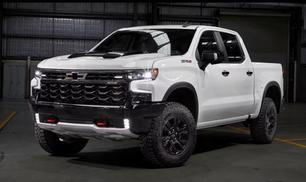
As the off-road focused 1500 model, the ZR2 has hardware and detailing consistent with its rugged bush-bashing persona, highlighted by aggressively treaded mud-terrain tyres and unique raised suspension with high performance dampers.
Other ZR2 features include a raised bonnet with ZR2 applique, ‘off-road cut’ front bumper, bash plates, black grille with ‘Flow Tie’ (flow-through) bow-tie motif, ‘Performance Red’ chassis-mounted front recovery hooks, concealed dual-outlet exhaust, black fender flares/door handles/bumpers/window surrounds and chrome ZR2 badges.
It has a tough and purposeful look with bluff-fronted styling and an imposing stance.
An expansive length of almost 6.0 metres (5931mm) and a 14.4-metre turning circle highlight formidable (and at times impractical) dimensions for urban life.
The cabin is spacious and airy with a tasteful blend of contrasting tones and textures combined with many soft-touch surfaces, yellow stitching along seams and splashes of chrome and satin chrome creating a plush look and feel.
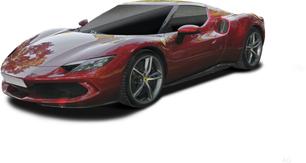
It is hard not to swoon when you gaze upon the 296 GTS, and I say that with no bias - I don’t think all Ferraris have looked this good.
But this is Ferrari at its dreamy, sweeping best, from the tarmac-kissing front — which generates so much downforce and cooling it negates the need for active aero — to its swollen haunches and the glass-topped engine window.
So what’s the difference between this and the GTB? Largely it is the ability to drop the folding roof, meaning you can feel the wind in your hair and that exhaust in your soul. To be honest, though, I reckon it looks better top up...
It’s a cockpit-style driver’s set-up inside, and there’s lots I love and some things I don’t. But let’s start with the steering wheel, which might be one of the best in existence.
It feels magic under the touch, as do the giant flappy paddles which remain fixed in place as you turn the wheel.
It’s also surprisingly comfortable in the figure-hugging sports seats, though climbing in and out of them is not necessarily something you want to do in front of a crowd.
Downsides? There is plenty of tech in the 296 cabin, but it’s all controlled from the steering wheel, making it fiddly and annoying to use.
Also, there are F1-levels of complexity on the control-everything steering wheel, and if I’m being honest, there are some buttons or switches, the function of which I still don’t fully understand.
The ZR2’s hefty 2587kg kerb weight and 3300kg GVM results in a 713kg payload, which is modest given a seated crew of five big tradies could use up about two-thirds of that payload capacity before loading any of their gear.
It can also legally tow up to 3500kg of braked trailer on a 50mm ball and up to 4200kg on a 70mm ball. The latter figure is 300kg less than the LTZ due to the specialised off-road suspension.
However, given the ZR2’s 6851kg GCM rating (or how much it can legally carry and tow at the same time), you would be left with a mere 64kg of vehicle payload if you wanted to tow the maximum 4200kg.
That’s barely enough for a driver - and a light one at that. Fact is, few if any owners in real-world use would need to tow 4200kg, but it’s important to be across these legal limits if you’re planning to.
The load tub is protected internally by a spray-on liner and offers almost 1.8 cubic metres of load volume. Its load floor is 1776mm long, 1813mm wide and sits 569mm deep, with 1286mm between the rear-wheel housings. More than wide enough for hauling Aussie or Euro pallets.
There are also 12 load-anchorage points, power assistance for lowering the tailgate and a tub camera to keep an eye on loads when driving. The rear bumper provides surefooted tub access using either the centre step or concave side-steps.
All occupants enjoy luxurious space, particularly rear passengers thanks to easy entry created by the wide-opening doors, a flat floor with no transmission hump for the centre passenger to straddle and palatial head and legroom even for tall people. Combined with ample shoulder room, a full crew can travel in enviable comfort.
Cabin storage for the driver and front passenger includes two bottle holders and a bin in each door. There’s also a large glove box and the centre console has an open tray and two USB ports up front, two bottle holders in the centre and a big box at the back topped by a padded lid that provides comfy elbow support.
Rear passengers get a bottle holder and bin in each door, plus more USB ports and two more pairs of bottle holders in the rear of the centre console and in the bench seat’s fold-down centre armrest.
There’s also storage pockets on both front seat backrests and handy compartments for small items are cleverly concealed within the rear seat’s upper-backrest cushions. Its 60/40-split base cushions can also swing up and be stored vertically if more internal load space is required, or to access ample under-seat storage.
What do you want to know around practicality? We’re talking two seats, about 200 litres of cargo space total and a couple of smallish storage spaces in the cabin. And… that’s about it.
Next question, please.
Our 1500 ZR2 test vehicle, like its LTZ Premium sibling, comes standard with GM’s thumping 6.2-litre petrol V8 paired with a 10-speed automatic and multi-mode 4WD transmission for a list price of $144,900.
Our example is also fitted with several items from the GMSV genuine accessory range including the tri-fold tonneau cover, side rocker protectors (aka rock rails) and matching removable side-steps. It’s also finished in 'Riptide Blue Metallic', which like the accessories is available at extra cost.
The ZR2’s standard equipment includes 18-inch gloss black alloy wheels with chunky 275/75 R18 Goodyear Wrangler Mud-Terrain tyres and a full-size alloy spare, LED headlights/DRLs/tail-lights, load tub camera, spray-on tub-liner with ZR2 logo, power tailgate, 4500kg towing kit including towbar, 12-pin harness and electric trailer-brake controller, 360-degree camera with up to 14 views and lots more (see Design).
Climb aboard the sumptuous interior with its keyless opening/start and you’re treated to a heated leather-wrapped steering wheel with power tilt/reach adjustment and multiple remote controls, leather-appointed and heated/cooled driver and front passenger seats with 10-way power adjustment and memory settings, heated rear seats, power sliding rear window, dual-zone climate control, front and rear USB ports and lots more.
The high-feature dash includes a colour 12.3-inch configurable driver’s instrument display and 13.4-inch multimedia touchscreen that controls, among other things, the Bose premium sound and wireless Apple CarPlay/Android Auto connectivity. The driver also has a choice of adaptive and non-adaptive cruise control plus there's a head-up display, switchable rear-view mirror camera function, tyre pressure monitoring and lots more, including the recent addition of standard front parking sensors on the ZR2.
Owners who need to tow will appreciate the reversing camera with hitch guidance and view, in-vehicle trailering app with different trailer profiles, trailer theft alert, automated trailer lighting test and a GCM alert.
Okay, hold your breath for a moment. The 296 GTS lists at $668,146, which is a sizeable jump over the hard-top GTB, which is more like $551,800. But what price a little open-air freedom?
What you get for that investment is a two-part (solid) folding roof, of course, but also what might be Ferrari’s most high-tech offering to date, with a plug-in hybrid system delivering potent performance rather than a usable EV driving range, a mega-clever braking system and an almost telepathic six-way 'Chassis Dynamic Sensor' designed to link the car’s key functions to make the experience, and the driver, somehow better.
Elsewhere, there are sports seats, Matrix LED headlights, 20-inch alloys, keyless entry and a very cool engine start touch-button on the even cooler steering wheel.
Oh, and there's wireless charging and Apple CarPlay, both thankfully standard in Australia, the latter controlled through the steering wheel and digital driver display.
It's all beautifully finished and a joy to behold and sit in.
Like the LTZ, the ZR2 is powered by a 6.2-litre petrol V8 producing 313kW of power at 5600rpm and 624Nm of torque at 4100rpm. It features cylinder deactivation to optimise fuel economy when full power isn't required.
This is paired with a refined 10-speed torque converter automatic, armed with an auxiliary external oil cooler ideal for heavy towing duties and off-road slogging. It also offers sequential manual shifting using steering wheel-mounted paddles and there are numerous selectable drive modes.
Its dual-range transfer case with push-button control offers the choice of '2WD High', '4WD High', '4WD Low' and '4WD Auto', with the latter being a full-time torque-on-demand system. It’s also equipped with driver-selectable front and rear locking differentials for optimum traction in the rough stuff.
Now we're talking. The powertrain here is both tremendous and terrifying, pairing a 3.0-litre twin-turbo-petrol V6 with a rear mounted electric motor, and a 7.5kWh battery, to deliver a total 610kW and 740Nm. That power is fed through an eight-speed dual-clutch auto transmission.
Those are, frankly, scary numbers, and enough, Ferrari says, to dispatch 100km/h in just 2.9 seconds, and to push on to a top speed of 330km/h.
GMSV claims official combined cycle (urban/extra-urban) fuel consumption of 12.7L/100km and the dash display was showing 15.3 when we stopped to refuel at the completion of our 397km test, which included our usual mix of suburban, city and highway driving of which about half was hauling a variety of payloads.
This compares to our own figure, calculated from fuel bowser and tripmeter readings, which was higher again at 16.8L/100km. That exceeds the usual 2.0-3.0L/100km discrepancy between official and real-world consumption but is still acceptable for a 2.5-tonne pick-up powered by a big petrol V8 in urban use.
So, based on our real-world consumption figure, you could expect a driving range of around 540km from its relatively small 91-litre tank.
As well as the ability to start up and slink away silently, the Ferrari 296 GTS’s little battery will deliver a 25km EV-only driving range, and contribute to the overall claimed fuel use of just 6.5L/100km.
Charging is AC only, and the the brand reckons it takes around 90mins to top up using an 11kW charger. The self-charging is on-point, though, with the Ferrari able to quickly recoup energy from braking and the like to top up the battery without needing to plug in.
The ZR2’s raised off-road suspension requires more of a climb aboard than the LTZ, but the low-slung removable side-steps fitted to our test vehicle certainly make boarding easier and are an accessory worth considering if most of your driving is on-road.
There are large handles on the truck’s A- and B-pillars to assist entry to the cabin where the driver is treated to multiple power adjustments of seat and steering wheel plus a large left footrest, which together provide a very comfortable driving position.
The ride and handling are outstanding, as the ZR2’s suspension combined with the additional cushioning of its baggy all-terrain tyres is commendably supple over bumps, yet it's surprisingly responsive to steering input without the ponderous feeling expected in a vehicle of this size and weight.
This response is optimised when the ‘Sport’ mode is selected as it sharpens steering, brake pedal feel and suspension tuning for a more engaging drive. It also activates the louder and freer-flowing exhaust setting and modifies the auto’s shift calibration, which allows the V8 to shine with a guttural roar under full throttle that is not only an aural delight but can quickly reach triple-digit speeds with remarkable ease.
By contrast, it can also deliver relaxed and fuel-efficient highway travel thanks to the V8’s auto cylinder deactivation and less than 1500rpm being required to maintain a leisurely 110km/h. Engine, tyre and wind noise are negligible at these speeds.
To test its payload rating we forklifted 475kg into the load tub which combined with our crew of two equalled a total payload of 655kg that was within 60kg of its legal limit.
The rear leaf-springs only compressed abut 35mm under this loading, which left more than enough bump-stop clearance to ensure there was no bottoming out on our test route. The ZR2 performed so effortlessly with this payload it was easy to forget we even had one.
Our only criticism of the driving experience was the tri-fold tonneau cover. When hauling loads, this accessory is designed to fold forward into a flat bundle that leans against the rear of the cabin with two adjustable struts to brace it in place (see photo).
This worked fine during suburban driving up to 80km/h but was not suited to higher speeds, as the increased air pressure made it flex enough to block the rear-view mirror's camera view. So, an alternative tonneau design would be preferable for those needing to do lots of highway travel with uncovered loads.
The engine is undoubtedly a highlight, and we’ll get to that in a moment, but I first want to talk about the steering in this car.
It might sound like a weird point to get hung up on, but it is sensational, and maybe the best I’ve ever experienced. Generally speaking, super-responsive steering can risk feeling overly sharp and uncomfortable when cruising, but somehow the 296 manages to feel super natural, super responsive, and super engaging, without every feeling sharp or darty. It’s just predictable, responsive, and spectacular.
Honestly, it is a highlight of a drive experience filled with highlights, with another being the dual-nature of this drop-top supercar. Long before I got anywhere near a twisting road I needed to navigate the usual nightmare that is Sydney, tackling traffic, suburbia, freeways, tunnels and expansion joints galore, and the 296 never felt uncomfortable.
Instead, the 296 slipped into a comfortable kind of lope, never jarring or rough, and eminently easy to get along with. And yet, when you arrive on the right road that veil of sensibility drops, and the Ferrari quickly reminds you of its potential.
For a start, the acceleration is properly, startlingly aggressive. Engage the 'Qualification' drive mode (which unlocks the full might of the Ferrari's electrified powertrain) and flatten your right foot, and you'll find the world suddenly hurtling past your windows, and your knuckles will no doubt whiten as you feel the rear tyres fighting for traction against the onslaught should you try it on anything but the straightest of roads.
It's addictive, but it's just one element of a near-perfect combination on offer here, with the 296 GTS the stiffest Ferrari drop-top to date, which becomes immediately clear as you start to attack corners with ever-growing confidence.
Grip, stability and stiffness in spades, the GTS delivers. And all accompanied by an exhaust howl so angry and evil it’s hard to believe it’s being generated by a V6.
It’s a thing of very near perfection.
There are currently no ANCAP star ratings for full-size US pick-ups. However, Australia’s vehicle safety authority has acknowledged the growing popularity of these vehicles with its inaugural ‘Large Utilities ADAS Safety Comparison’ to provide local consumers with comparisons of Advanced Driver Assistance Systems (aka crash-avoidance technologies).
The Silverado 1500 range (February 2025-build onwards) earned the minimum bronze grading, with its score of 27 per cent being the lowest of all vehicles tested. By comparison, Ford’s F-150 earned the highest score with 81 per cent and premium platinum status.
Even so, the ZR2 has an extensive active safety menu including forward collision alert with low-speed AEB, lane-keeping, blind-spot monitoring (which expands to include trailers), rear cross-traffic alert, front/rear parking sensors, plus a 360-degree camera view (with up to 14 views) and more.
It also has six airbags including side-curtain protection for all outboard seating positions, plus ISOFIX child-seat anchorages on the two outer rear seating positions and three top-tethers.
Not much chance of the 296 GTS being crash-tested in Australia — you’d be able to hear the Italians weeping across the ocean.
You do get front and side airbags parking sensors, a reversing camera, auto high beam and tyre pressure monitoring.
Now comes standard with a class benchmark five years/unlimited km manufacturer warranty, plus five years of roadside assist.
Scheduled servicing is every 12 months/12,000km whichever occurs first, but there's no capped-price servicing. Expect a three year service bill of around $2000, which isn't outrageous for a vehicle of this type.
GMSV has an Australian network of 50-plus dealers across most states and territories and all dealerships can provide vehicle servicing.
Standard is a three year warranty, but you can extend that for up to five years. Then, if your car has less than 90,000km on the clock, you can opt into the 'New Power15', which gives you up to 15 years total warranty coverage and is fully transferable.
The first seven years scheduled maintenance is free-of-charge.